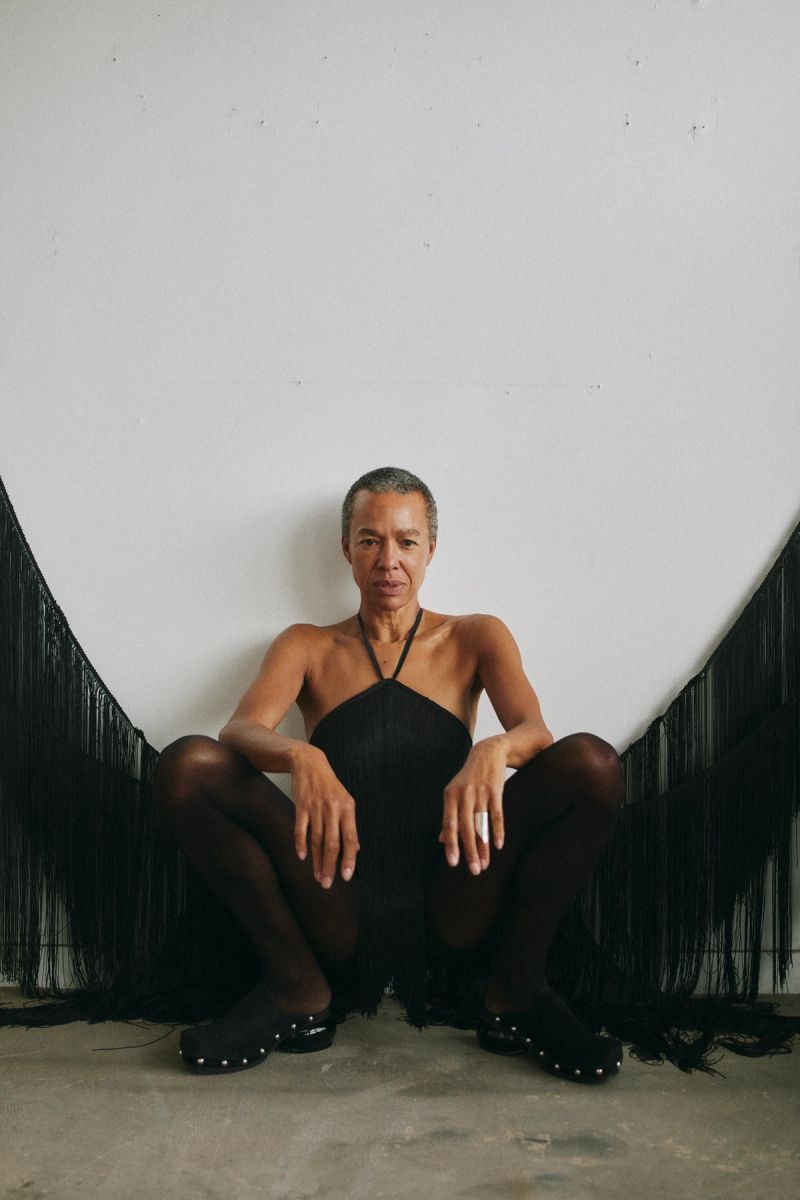
Eilen wears dress by SRVC, shoes by Essen
Dialogues: Eilen Itzel Mena
/ interview / PEOPLE
photography DAN BURWOOD
styling SHIRLEY AMRATEY
words AUTTRIANNA WARD
I first met Eilen through our shared community, and our paths have crossed in different cities ever since, from New York to London to Los Angeles. I was grateful for the chance to reconnect with her for this feature. Her work has always stood out to me for its distinctive colour sensibility, evocation of spirit, and expansive approach to space and place.
This moment in her practice feels especially pivotal as she continues to grow in London and participate in conversations across the Latin American, Afro–Latin American, and Caribbean diasporas as she prepares for her solo presentation at Untitled.
AW
It’s been so long since we’ve connected! How’s London treating you, or where are you in the world these days?
EIM
Hey girl! Yes, it's been too long. So nice to connect with you again. London has been great. I have just recently completed my third year living here. Time has gone by so fast!
AW
I’m really interested in this idea of bringing Latin American and Spanish-speaking Caribbean dialogu
EIM
Over the last year, I have been in community with young Latin American artists and curators who have come to study, live and work in London. Our group has folks from Mexico, Argentina, Brazil, Colombia, Venezuela, Puerto Rico and the Dominican Republic! Some folks I’ve studied with, others I’ve done shows with, but in general we’re all good friends, and it has expanded the ways I view my Latin American identity, heritage and a lineage of diaspora and immigration within myself. I’m the only person in the group who is currently two spaces removed from my ancestral lineage, having come to London via New York and by way of the Dominican Republic. Everyone else is a young adult coming directly from their respective Latin American nations, so the double diaspora experience for me has been unique. I definitely speak more Spanish here than I do in New York with other Latinx people, and I am enjoying the cultural exchange with others from different countries. I have enjoyed seeing the work of Latin American artists in London, like: Antonio Társis (Brazil), José Jun Martinez (Puerto Rico), Camilo Parra (Colombia), Brian de Jesus (Venezuela), Julita Mahrer Viñas (Dominican Republic), Rita Fernandez (Mexico), Bryan Giuseppi Rodriguez Cambana (Peru), Mati Araoz (England & Bolivia), Zully Mejía (Peru) and Antonia Caicedo Holgúin (Colombia)
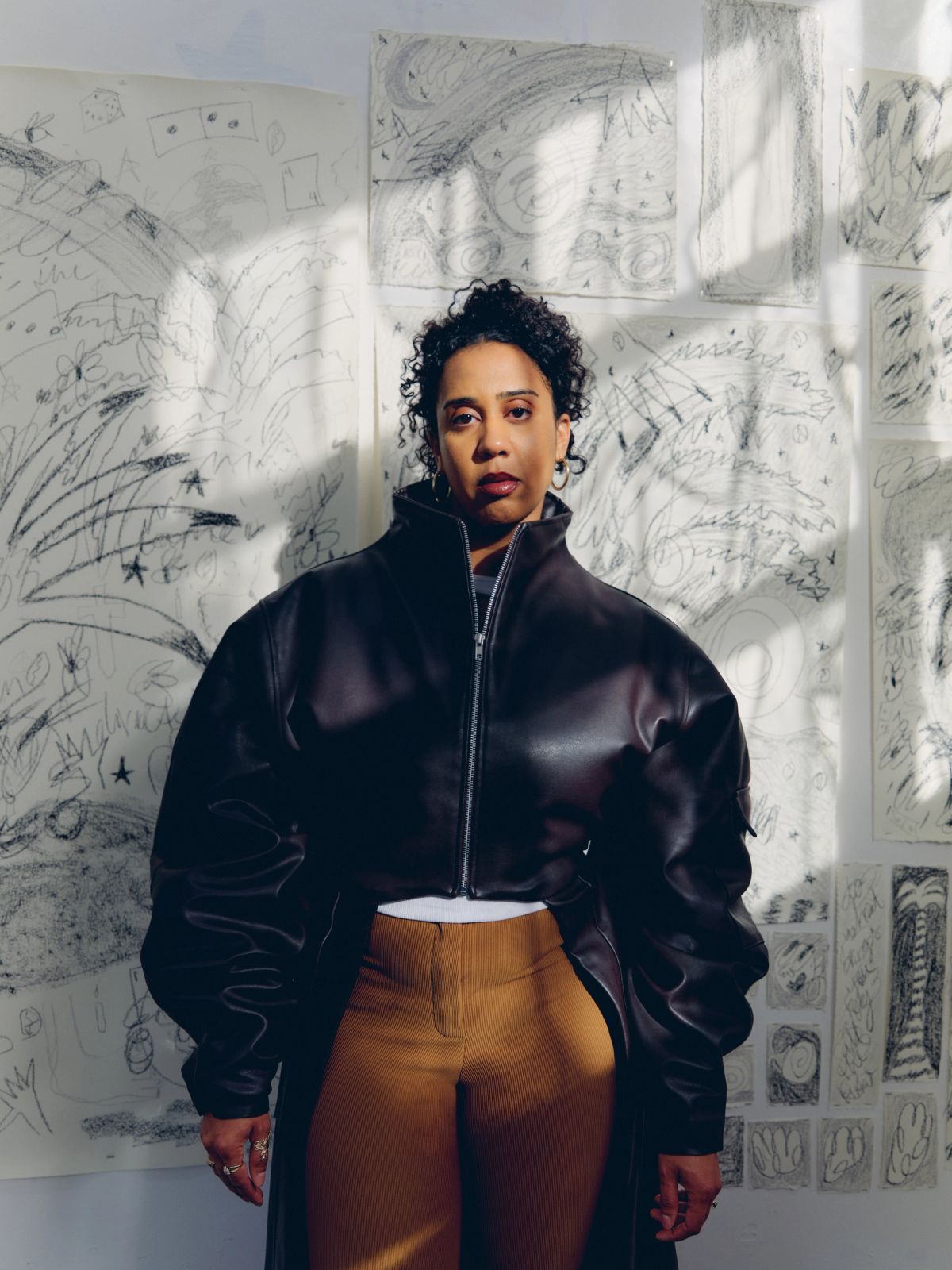
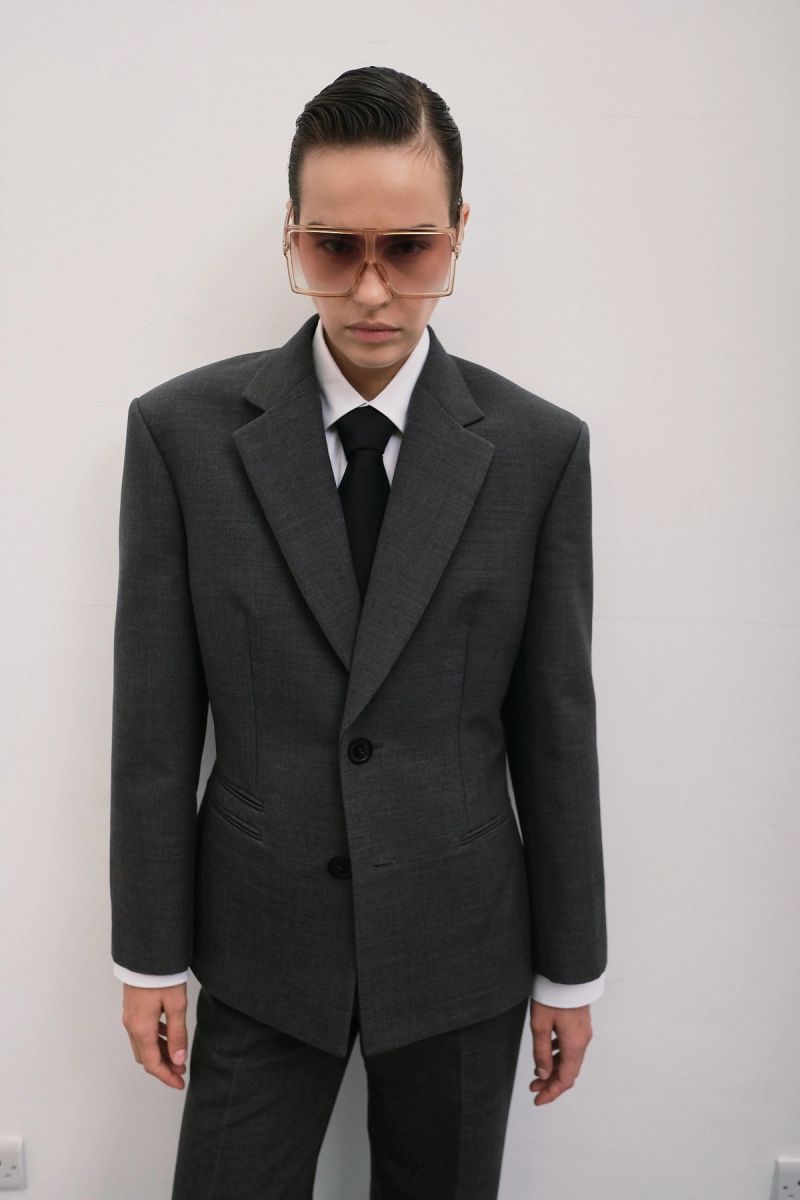
Jacket by Selasi, vest by SRVC, trousers and earrings stylists own.
AW
What do you hope to gain, personally or artistically, from your time in the UK?
EIM
I am an African Diaspora person. For me to be diasporic is an ancestral action as well as a personal one. It's important to me to have experiences in the diaspora as a way to understand myself and my community better. I wanted to study and create art in the UK because I wanted an education that would discuss and support a global experience. London is such a diverse city, and I find that folks tend to have global conversations surrounding art when we immigrate here for school. The arts ecosystem here caters to local, national and international players. I wanted to study, live and work in a place where the Caribbean community and its art history is strong. London’s Caribbean art history is created through a weaving of many islands with shared histories. I am a Spanish-speaking Caribbean person in a primarily English-speaking Caribbean-influenced city. I am aware of how my vantage point can influence and be influenced in a place like this.
While living and creating here, I hope to gain new understandings of my intersectional identity, diasporic communities, and how we record our beingness through our artforms across different waters and lands. I hope to create works that speak for themselves and command a room, as if they were confident in their being-ness.
AW
Your practice is so layered, materially, conceptually, and spiritually. How did you come to this place in your work, and where do you feel you’ve experienced the most growth, both technically and conceptually?
EIM
My time in London has been a great vessel for me to reach a place where my practice has become more layered materially, conceptually, and spiritually. Studying towards my MFA there, while doing an artist residency in Mexico City, revisiting Salvador, and attending the São Paulo Biennial during my Slade holidays, helped me grow tremendously. These experiences allowed me to see myself and my personal and communal identity much more clearly. By having many experiences that asked me to grow emotionally, intellectually, and spiritually through working towards an MFA, I was able to integrate that growth into my creative practice, thus allowing it to show up technically and conceptually.
AW
You often speak about joy, color, and visibility in relation to Blackness and femme identity. When did color first become a kind of language for you?
eim
During my last semester at USC, I studied abroad in Salvador, Bahia, Brazil. For those six months, I challenged myself not to create art, but to just take in the experience. I studied, built community, danced, swam, traveled and wrote a lot while in Brazil. The Portuguese architecture, amongst more modern homes and buildings, tended to be connected through the color of the paint on their façades. When I arrived back in the USA, I had a lot of creative energy that I exercised through intuitive drawing in a composition notebook using oil pastels. Many of the drawings are related to my time in Brazil, whether through subject matter or the many colors I saw there. Doing this allowed me to create art from a personal place. Housing the drawings in a composition notebook while using oil pastels took me back to my first experience of artmaking: being a child and drawing with crayons. Because of the use of these materials, I was able to create joy for myself after that.
"Colour has been a tool that I employ heavily in my practice to signify joy and to command the picture plane."
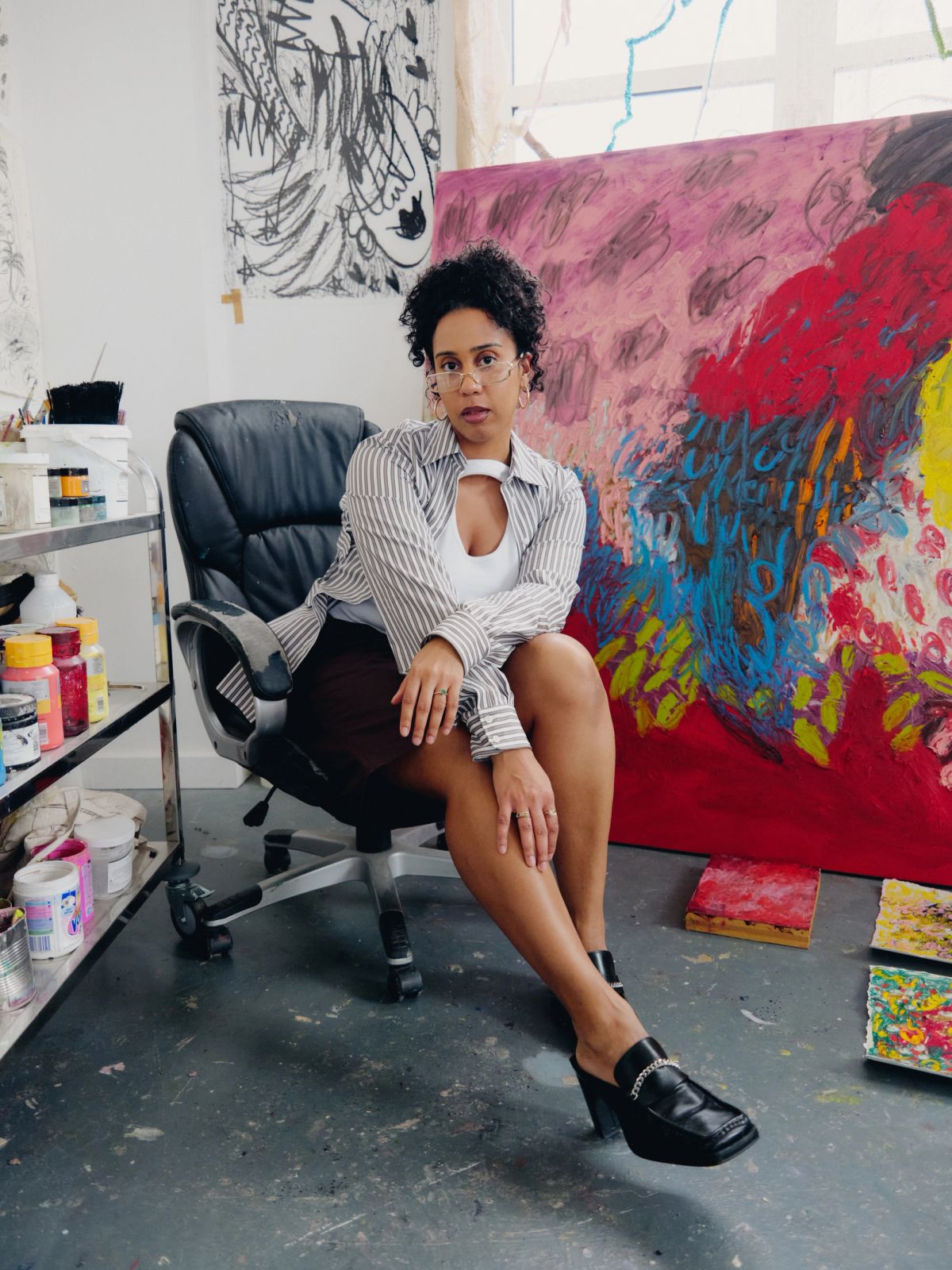
Shirt and top by SRVC, shorts by Selasi, shoes by Martine Rose, glasses, rings and earrings
aw
I think a lot about how Black artists can get boxed into seriousness, expected always to speak to struggle or identity. How do you hold onto play, experimentation, and lightness in your practice, even as you’re engaging with complex histories and emotions?
EIM
My creative practice primarily explores how individuals within the African Diaspora and Latin America seek joy and purpose, while reflecting on themes of ancestry, family, community and colonial history. In light of recent difficult and painful global events, I am very interested in exploring the search for joy, especially in times of personal and community strife. The enjoyment and pleasure of joy for joy’s sake is just as important to me, my understanding of the world and the development of my creative practice.
Over the last few months, I have been holding interviews with folks who have national, cultural, and/or ancestral ties to Africa, the African Diaspora, and/or Latin America. These are regions that share a colonial history, as well as how joy is a key component of our cultural expressions. In these conversations, we discuss joy’s role in their lives while highlighting the things and practices that bring happiness and lightness into their everyday experiences. These conversations have allowed me to access joy in times when it seems like it may be missable. For me, joy is complex and layered, similarly to play and attaining a light-heartedness.
I realized that I hold on to play, experimentation and lightness in my practice by grounding myself in my vulnerability and sensitivities. Doing so allows me to approach the work with humility, which is transmuted into curiosity, confidence, and ultimately the joy of creation and completion.
AW
You’ve lived and worked across so many geographies. How does place, whether London, the Dominican Republic, or elsewhere, shape your approach to scale, materials, or the physical experience of painting?
eim
Because I highly value travel and cultural immersion, I approach each place as a new ground for curiosity within my practice and myself. I primarily focus on how new locations or different geographies will trigger new ideas and personal growth for me. Afterward, I depict that in the work. The scales, materials, colors, and the physical experience of painting utilized are a result of the impact of those places.
aw
You’ve said that “color is memory.” How do you think about memory and lineage as materials in your work? What does it mean for you to paint with memory?
eim
For the early years of my life, I lived in the Dominican Republic. There, my mother was a young architect, and my grandmother was a very creative homemaker. Between the two of them, they instilled in me a love for creative expression as a means to create a home, whether it be physical, emotional or spiritual. I became interested in the architecture of homes in the Dominican Republic and the Caribbean in general, while being inspired by the interior design of our home in the 90s. Because of these early references, I began to use memory as a personal archive of sorts. Here, I could pull out emotions I would like to explore or depict in my work, or colours from the environment of my upbringing, as material for my creative practice.
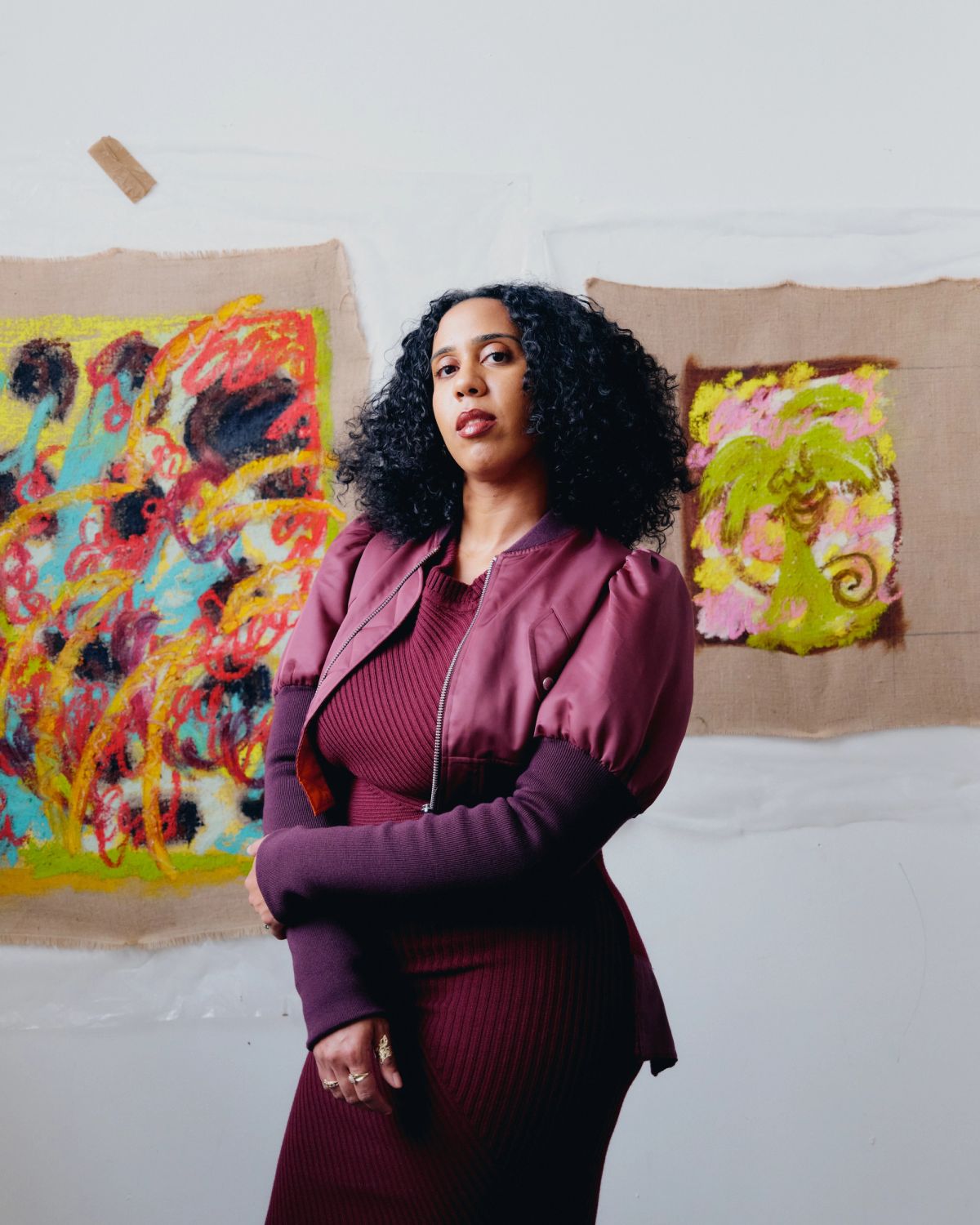
Jacket by John Lawrence Sullivan, top and skirt by SRVC
aw
What are you working on for UNTITLED this year?
eim
For Untitled this year, I will be presenting a solo booth of paintings and graphite drawings titled "Under the Palm’s Grace." In this body of work, I position the palm tree as an active spiritual and cultural figure, holding ancestral memory, ritual knowledge and the promise of destiny. The palm appears throughout my paintings as both symbol and witness. It is rooted in my Caribbean ancestry and my Ifa spiritual practice. These works explore grief, memory, ritual, destiny, purpose, and the possibilities of expanded language.
aw
You’ve described your paintings as spaces where the body and spirit can communicate and reconnect. What kind of spaces, literal or metaphorical, would you like to take up in the future?
EIM
I would love to showcase work in so many places! The ones that I am interested in are cemeteries, roofs of homes in the Caribbean, playgrounds, schools, beauty salons, and mental health clinics.
AW
Looking ahead, are there collaborations, mediums, or sites you’re dreaming toward next?
eim
I am very interested in focusing on a new body of installation and sculptural works. I am excited about the possibility of immersing viewers in the worlds my paintings express.
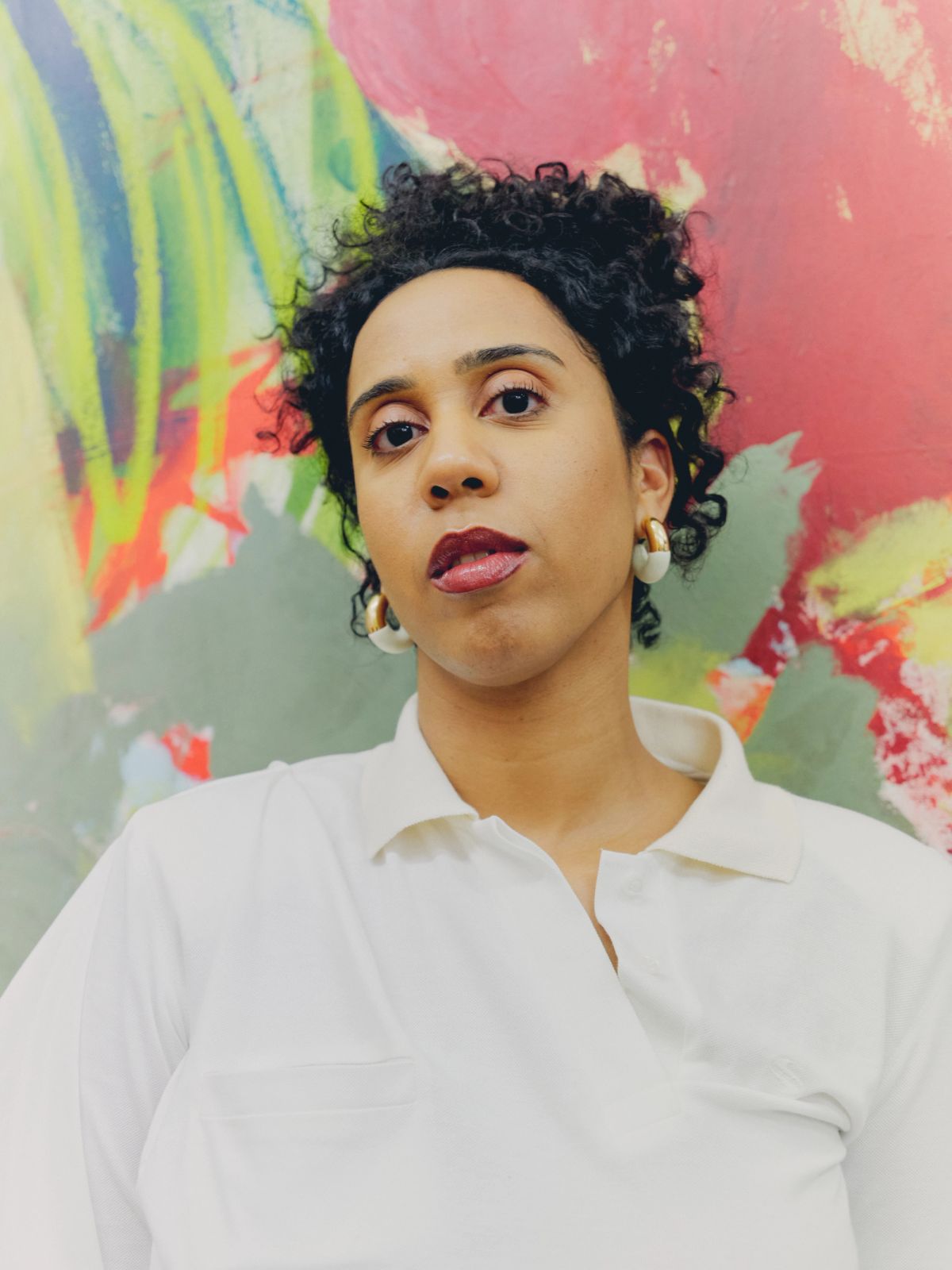
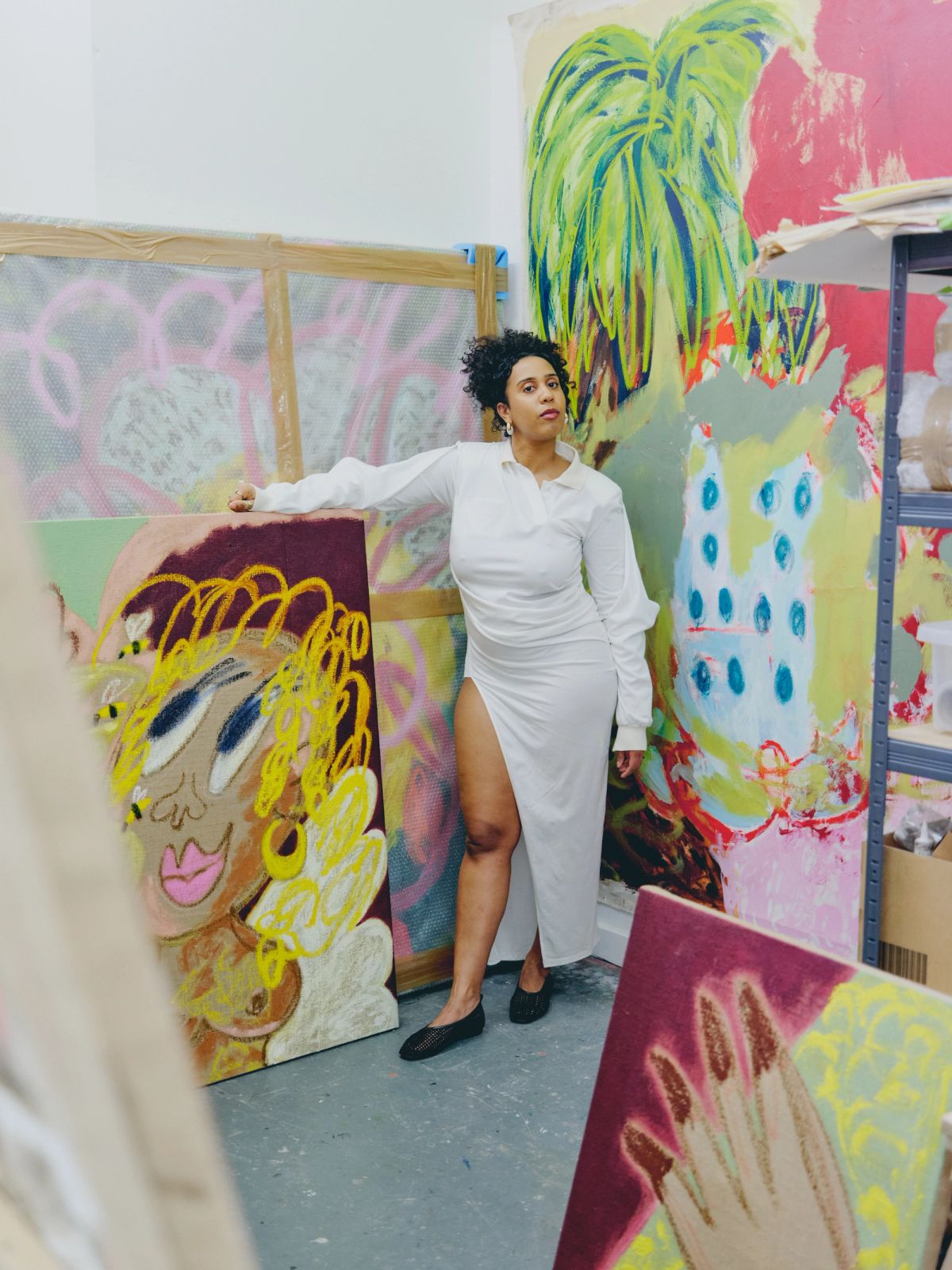
Dress by SRVC, earrings by Sunnei